
Losing a tooth can affect more than your smile. It can change the way you chew, speak, and feel in social situations. It can also affect the teeth around the gap over time. When a tooth is missing, neighbouring teeth may slowly shift, the bite may become uneven, and the jawbone in that area may begin to shrink because it is no longer receiving normal chewing stimulation.
Two common options for replacing a missing tooth are dental implants and dental bridges. Both can restore the appearance of the smile and improve chewing. However, they work in different ways, involve different levels of treatment, and suit different patients. Understanding the difference helps you have a more informed discussion with your dentist.
What Is a Dental Implant?
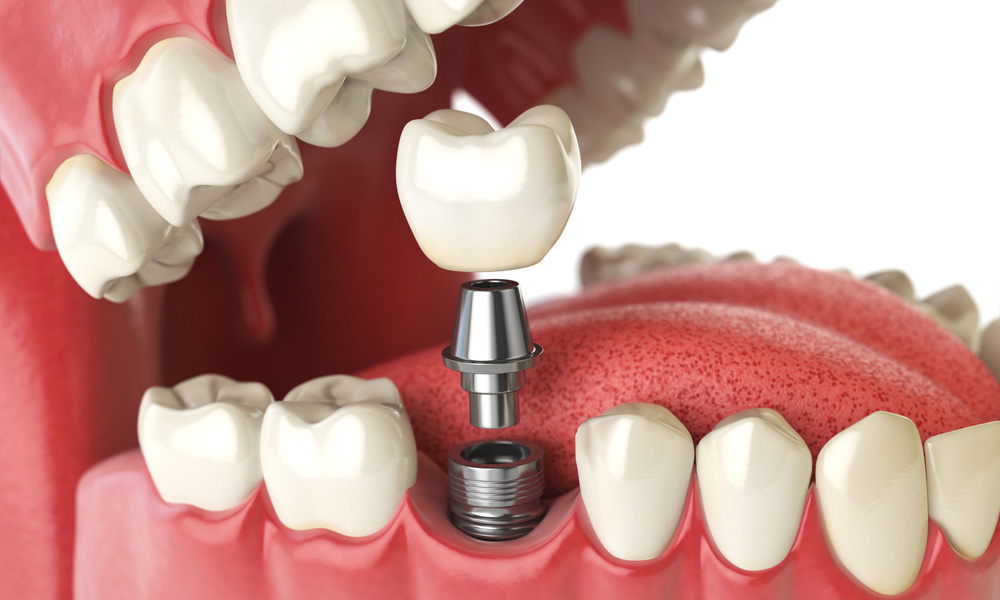
A dental implant is a small titanium post placed into the jawbone. It acts like an artificial tooth root. After the implant bonds with the bone, a crown is attached on top to replace the visible tooth.
Implants are often considered when a patient wants a fixed replacement that does not depend on the neighbouring teeth for support. They can be used for a single missing tooth, several missing teeth, or even a full arch of teeth in selected cases.
A major advantage of implants is that they help maintain bone stimulation in the area where the tooth was lost. This is important because bone loss is a natural process after tooth loss. However, implants require healthy gums, adequate bone, and good oral hygiene. Some patients may need additional procedures, such as bone grafting, before implant placement.
What Is a Dental Bridge?
A dental bridge fills the space created by a missing tooth by using nearby teeth as support. In a traditional bridge, the teeth on either side of the gap are shaped to hold crowns. The replacement tooth is attached between these crowns.
Bridges have been used successfully for many years. They may be suitable when the neighbouring teeth already need crowns or have large fillings. A bridge can also be a useful option for patients who are not suitable for implant surgery due to certain medical, bone, or financial reasons.
The main point to understand is that a bridge depends on the adjacent teeth. If those supporting teeth are healthy and untouched, preparing them for a bridge means removing some natural tooth structure. This is one reason many dentists discuss implants when the neighbouring teeth are strong and healthy.
Comparing Treatment Time
A dental bridge can often be completed faster than an implant. In many cases, it may take a few visits over a shorter period. This makes it appealing for patients who want a quicker fixed solution.
An implant usually takes longer because the jawbone needs time to heal and integrate with the implant. The total timeline can vary depending on the patient’s bone condition, whether extraction has recently been done, and whether grafting is needed. Some cases allow faster placement or temporary teeth, but this depends on clinical suitability.
Patients should avoid choosing only on the basis of speed. A faster treatment is helpful, but the long-term health of the teeth, gums, and bone should also guide the decision.
Comparing Comfort and Function
Both implants and bridges can restore chewing comfort when planned well. A well-made bridge can feel stable and natural. A well-integrated implant can also provide strong chewing support because it is anchored in the bone.
The difference is in how pressure is handled. A bridge transfers chewing forces to the supporting teeth. An implant transfers forces to the jawbone, similar to a natural tooth root. For patients with strong bone and healthy gums, this can be an advantage.
Comfort also depends on cleaning. Food can collect around bridges if they are not maintained properly. Special floss or interdental brushes may be needed to clean under the replacement tooth. Implants also need careful cleaning around the gum line, because gum infection around an implant can affect its long-term stability.
Comparing Impact on Nearby Teeth
This is one of the most important decision factors. A dental implant usually does not require cutting the neighbouring teeth. This can preserve natural tooth structure, especially when the adjacent teeth are healthy.
A bridge generally requires reshaping the supporting teeth. If those teeth already have large fillings, cracks, or old crowns, this may not be a major concern. In such cases, a bridge may solve multiple problems at once. However, if the neighbouring teeth are completely healthy, your dentist may discuss whether an implant would be more conservative.
Comparing Maintenance and Longevity
Both options can last for many years with good care. Their success depends on oral hygiene, bite balance, dental check-ups, and habits such as smoking or teeth grinding.
Implants can have excellent long-term results, but they are not maintenance-free. Patients need regular dental reviews to check the gums, bone levels, bite forces, and cleanliness around the implant.
Bridges also need monitoring. If decay develops under the crowns supporting the bridge, the entire bridge may be affected. Gum health is equally important. A bridge may fail earlier if cleaning is poor or if one supporting tooth becomes weak.
Who May Be Better Suited for a Dental Implant?
A dental implant may be considered for patients who have good general health, healthy gums, enough jawbone, and a desire to preserve neighbouring teeth. It may also be useful when only one tooth is missing and the teeth beside the gap are natural and strong.
Patients who are considering Dental Implants in Mumbai can consult Opus Dental Specialities to understand whether implant treatment is suitable for their bone condition, bite, gum health, and long-term goals.
Who May Be Better Suited for a Bridge?
A bridge may be considered when the neighbouring teeth already need crowns, when bone volume is insufficient and the patient does not want grafting, or when implant surgery is not advised due to medical reasons. It may also be considered when the patient wants a fixed tooth replacement but prefers a shorter treatment process.
The right choice should be based on a full dental examination, not on general preference alone.
Questions to Ask Your Dentist
Before deciding, ask your dentist these questions: Are my neighbouring teeth healthy? Do I have enough bone for an implant? Will I need grafting? How long will treatment take? How should I clean the replacement tooth? What is the expected maintenance? What happens if I grind my teeth? What are the total costs, including future care?
These questions make the discussion practical and patient-specific.
Final Takeaway
Dental implants and bridges can both replace missing teeth effectively. Implants are often preferred when preserving neighbouring teeth and supporting jawbone health are priorities. Bridges may be suitable when adjacent teeth already need crowns or when implant treatment is not the best clinical choice.
The better option is the one that fits your oral health, medical condition, time expectations, budget, and long-term maintenance ability. A careful consultation helps you choose a tooth replacement that feels comfortable, looks natural, and supports your dental health for years.