
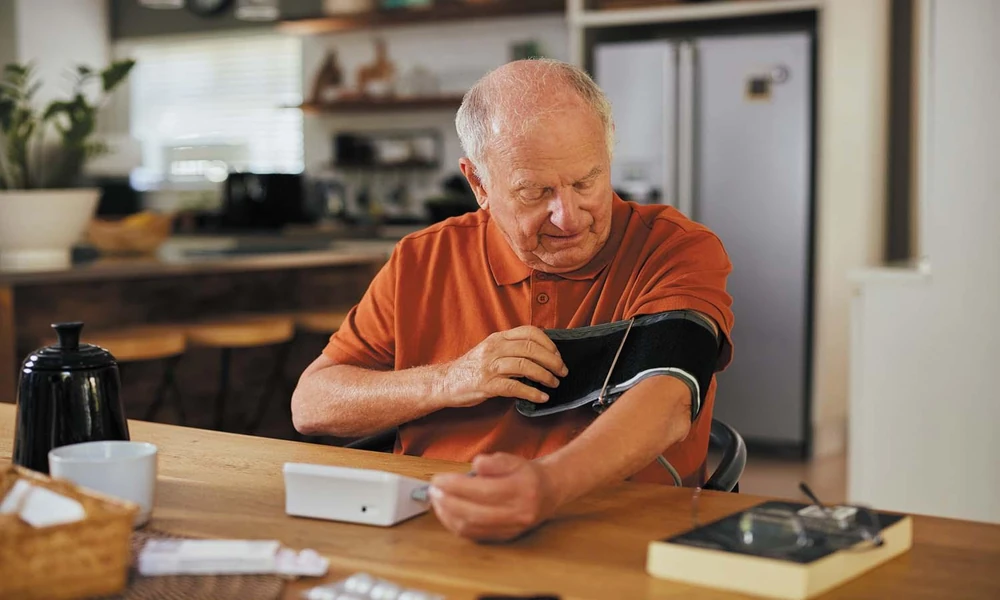
Blood pressure changes throughout the day and often rises after waking. A morning increase is part of the body’s normal daily rhythm, but consistently high morning readings may need attention. Research on home blood-pressure monitoring supports its use in diagnosing and following hypertension when measurements are taken correctly. A repeated pattern is more meaningful than one unusual result.
Hormones that help the body wake can temporarily increase heart rate and blood-vessel tone. Activity after getting out of bed can raise the reading further.
Poor sleep may contribute. A restless night, pain or severe stress can affect the next morning’s measurement.
Obstructive sleep apnea is an important possibility. Loud snoring, choking during sleep, witnessed breathing pauses and daytime sleepiness should be discussed with a clinician.
Tobacco and caffeine can increase blood pressure temporarily. Measure before smoking or drinking tea or coffee when that is the schedule advised by the clinician.
Missed medicine may lead to higher readings. Some medicines may also wear off before the next dose.
Do not change the timing of blood-pressure medicine without medical advice. Night-time dosing is not automatically better for every person.
Begin with correct technique. Use a validated upper-arm monitor and a cuff that fits properly.
Empty the bladder, sit quietly for about five minutes and keep the feet flat. Support the arm at heart level and avoid talking.
Take two readings separated by a short interval when advised. Record the date, time, pulse and medicine timing.
Compare readings across several days. A single high number after a poor night’s sleep is different from a repeated morning pattern.
Bring the monitor to a clinic occasionally so its results can be compared with professional equipment.
Morning hypertension may require review of sleep, sodium intake, stress, medicine duration and other health conditions.
Kidney disease, diabetes, thyroid problems and some medicines can influence blood pressure. A clinician may order tests when the pattern is unexplained.
Lifestyle measures such as regular activity, reduced excess sodium, tobacco cessation and better sleep may support control. They should be used with, not instead of, prescribed treatment.
Madhavbaug provides information about its supervised hypertension-care programme. Readers can learn about its broader clinical services at Madhavbaug.
Seek emergency help when a very high morning reading occurs with chest pain, severe headache, breathlessness, confusion, weakness, difficulty speaking or sudden vision changes.