
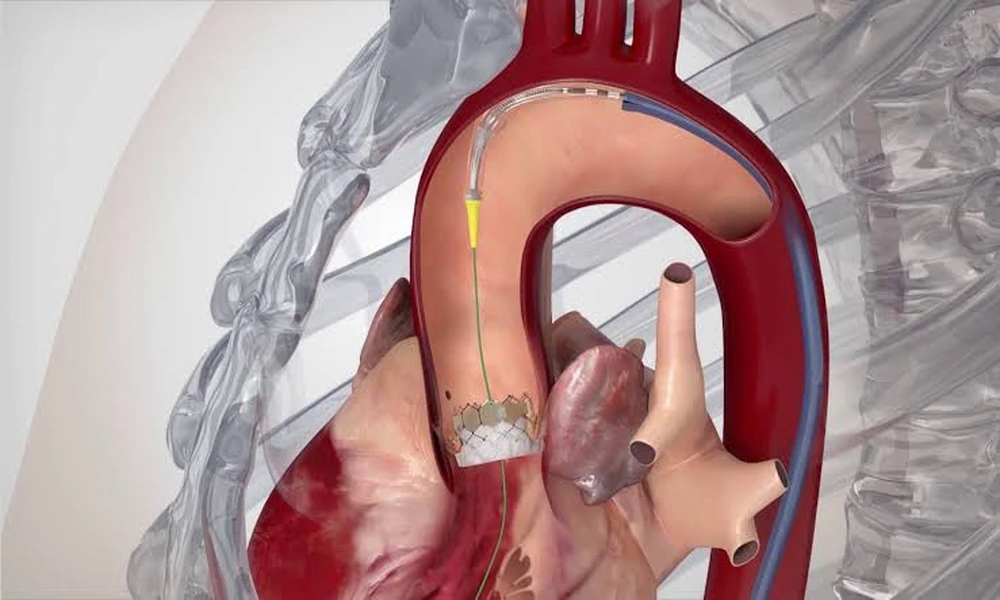
One advantage of transfemoral TAVI is that it usually avoids the large chest incision required for conventional surgical aortic valve replacement. This may allow earlier mobilisation and a shorter physical recovery in appropriately selected patients. However, “minimally invasive” does not mean “minor.” TAVI is a heart-valve replacement procedure, and monitoring after treatment remains essential.
Immediately after the procedure
Once the valve has been implanted, the team checks:
- Blood pressure
- Heart rhythm
- Oxygen level
- Catheter access site
- Kidney function
- Neurological status
- New valve function
Some patients spend time in an intensive or high-dependency area, while others follow a streamlined recovery pathway.
The exact pathway depends on the patient’s health and whether any complications occur.
Why heart rhythm is watched carefully
The electrical system controlling the heartbeat runs close to the aortic valve.
Implanting a new valve can sometimes disturb electrical conduction.
Some rhythm changes settle without treatment. Other patients may require additional monitoring or a permanent pacemaker.
Patients should therefore not assume that being comfortable immediately after TAVI means all monitoring is complete.
Getting out of bed
Early mobilisation is often encouraged once the clinical team considers it safe.
Walking reduces prolonged immobility and helps assess how the patient responds to the new valve.
However, the artery used for catheter access also needs time to heal.
Patients should follow instructions about:
- Walking
- Climbing stairs
- Lifting
- Driving
- Exercise
- Bathing
- Wound care
A generic online recovery schedule should never override instructions from the treating team.
How quickly will breathlessness improve?
Some people notice improvement relatively soon, particularly when their previous symptoms were primarily caused by the narrowed valve.
Others improve more gradually.
Recovery may be slower when a patient also has:
- Lung disease
- Heart failure
- Coronary artery disease
- Anaemia
- Kidney disease
- Frailty
- Other valve disease
Not every symptom will necessarily disappear after valve replacement.
Medicines after TAVI
Medicine plans are individual.
Patients may already be taking treatment for:
- Atrial fibrillation
- Blood pressure
- Coronary artery disease
- Heart failure
- Diabetes
- Cholesterol
The team will decide whether antiplatelet or anticoagulant treatment is appropriate after the procedure.
Patients should not independently add aspirin, stop a blood thinner, or change doses based on another patient’s TAVI experience.
Caring for the catheter site
The groin area should gradually heal.
Some bruising can occur, but patients should seek medical advice when there is:
- Increasing swelling
- Persistent bleeding
- A rapidly enlarging lump
- Severe pain
- Coldness or numbness in the leg
- Signs of infection
Heavy bleeding requires urgent medical attention.
Why follow-up echocardiography matters
A patient can feel better while still needing objective monitoring of the replacement valve.
Follow-up may assess:
- Valve opening
- Blood-flow gradients
- Leakage
- Heart pumping function
- Rhythm
- Blood pressure
- Symptoms
The 2025 ESC/EACTS guidelines include ongoing management of patients with prosthetic valves as an important part of long-term valve care.
Returning to normal activity
Recovery varies considerably.
An active patient without major complications may progress faster than an older person with frailty or several medical conditions.
Cardiac rehabilitation can be useful for some patients because it provides a structured approach to exercise and cardiovascular risk management.
Activity should increase gradually rather than jumping immediately from hospital discharge to full exertion.
Warning symptoms after discharge
Contact the treating team promptly for:
- Increasing breathlessness
- Fever
- Worsening swelling
- New palpitations
- Dizziness
- Fainting
- Increasing groin pain
- Unexpected bleeding
Emergency assessment is required for:
- Severe chest pain
- Stroke symptoms
- Collapse
- Severe breathlessness
- Uncontrolled bleeding
What about dental and infection care?
A replacement heart valve changes long-term medical considerations.
Patients should tell relevant healthcare professionals that they have a prosthetic valve and ask their cardiologist for personalised guidance about infective endocarditis prevention and dental care.
Do not start antibiotics independently.
Heart Valve Experts provides additional patient information on TAVI recovery and follow-up care after discharge.
TAVI recovery should therefore be viewed as a process rather than a single discharge date. The first month is about healing, recognising warning signs, rebuilding activity, and confirming that the valve and heart are functioning as intended.