
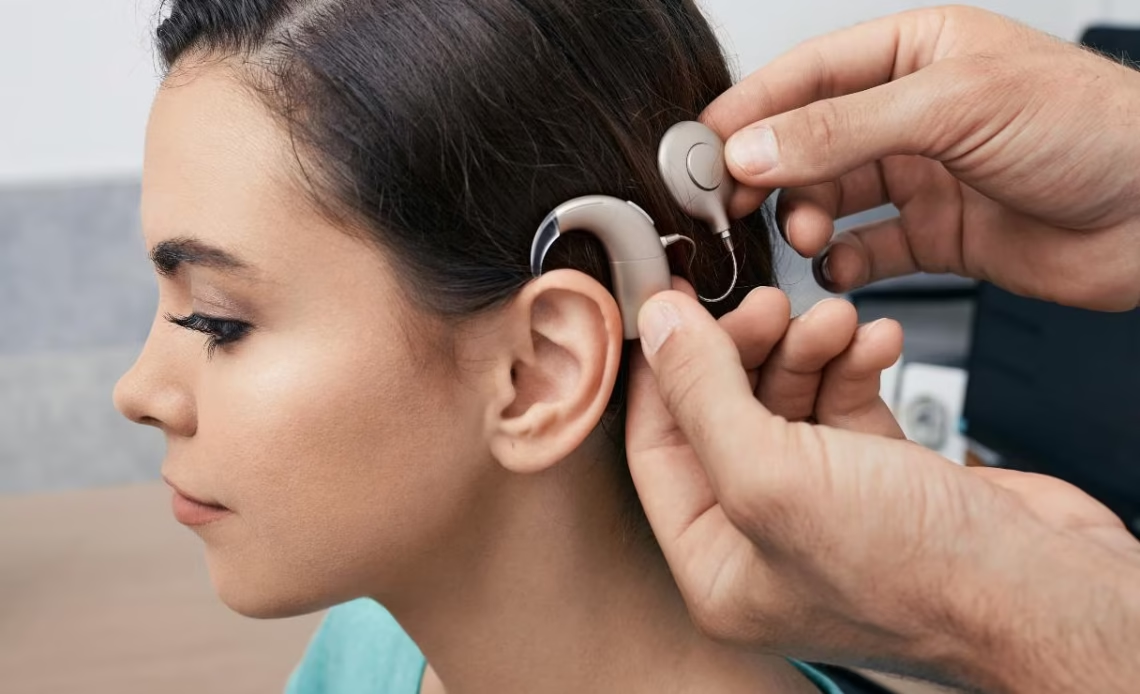
Hearing loss affects millions of people worldwide, influencing communication, social engagement, safety, and overall quality of life. While hearing aids remain the most recognized treatment, they are not always sufficient on their own. Many individuals struggle in specific environments, such as crowded rooms, lecture halls, or while watching television. This is where assistive listening devices (ALDs) play a crucial role, offering targeted support that complements traditional amplification.
Today’s advanced technology has expanded the range of available hearing solutions, enabling individuals to hear more clearly in challenging listening situations. These devices are designed to reduce background noise, enhance speech clarity, and transmit sound directly to the user, making communication smoother and less exhausting.
For individuals seeking professional guidance, consulting specialists at a reputed best ENT clinic in Vadodara or similar advanced centers can help determine the most suitable combination of devices. A comprehensive evaluation ensures that the chosen solutions address specific hearing needs rather than providing a one-size-fits-all approach.
What Are Assistive Listening Devices (ALDs)?
Assistive listening devices are specialized tools designed to improve hearing in particular situations where standard hearing aids may fall short. Unlike hearing aids, which amplify all sounds, ALDs focus on delivering the desired audio signal directly to the listener while minimizing background noise.
These devices can be used independently or in combination with hearing aids and cochlear implants. They are invaluable in environments with distance, reverberation, or competing noise, factors that commonly interfere with speech understanding.
ALDs are widely used in homes, classrooms, workplaces, theaters, transportation hubs, and public venues. Many countries also mandate accessibility systems in public buildings to support individuals with hearing impairments.
Personal Amplifiers for One-to-One Conversations
Personal sound amplification products are compact devices designed for close-range listening. They typically consist of a microphone and headphones or earbuds, allowing users to hear conversations more clearly in quiet or moderately noisy settings.
These devices are beneficial for:
- Talking with family members
- Attending small meetings
- Communicating during travel
- Listening during medical appointments
Unlike traditional hearing aids, personal amplifiers do not require custom fitting or professional programming, making them accessible and affordable for many users.
However, they are not intended to treat hearing loss permanently and should not replace professional evaluation when needed.
FM Systems: Clear Sound Over Distance
Frequency Modulation (FM) systems are among the most effective ALDs for situations involving distance and background noise. These systems use radio signals to transmit sound directly from a speaker’s microphone to the listener’s receiver.
Typical applications include classrooms, lecture halls, conferences, and guided tours. For example, a teacher wearing a transmitter can speak normally while students with receivers hear the voice clearly, regardless of seating position.
FM systems significantly improve speech comprehension and reduce listening fatigue. They are widely used in educational settings for children with hearing challenges, helping them participate fully in learning activities.
Infrared Systems for Private Listening
Infrared listening systems use light waves to transmit sound signals from a source to a receiver. Because the signal cannot pass through walls, these systems provide enhanced privacy and reduced interference.
They are commonly used in:
- Home television viewing
- Movie theaters
- Courtrooms
- Conference rooms
Users wear lightweight receivers with headphones or neck loops, allowing them to adjust volume independently without disturbing others.
Infrared technology is particularly beneficial for shared living spaces, enabling individuals with hearing difficulties to enjoy media at comfortable levels while others listen at normal volumes.
Induction Loop Systems in Public Spaces
Induction loop systems, also known as hearing loops, are installed in many public venues to improve accessibility. These systems transmit sound electromagnetically to hearing aids equipped with telecoils.
Once inside the loop area, users simply switch their hearing aid to the telecoil setting to receive clear audio directly from the sound source. This eliminates background noise and echoes, providing a clean listening experience.
Loop systems are commonly found in:
- Airports and train stations
- Churches and places of worship
- Theaters and auditoriums
- Service counters
- Museums
Captioning and Visual Alert Systems
Not all assistive solutions rely on sound amplification. Visual technologies play an equally important role in supporting individuals with hearing loss.
Captioned telephones display real-time text of conversations, allowing users to read what the caller is saying. Similarly, television captioning provides written dialogue synchronized with audio content.
Visual alert systems use flashing lights or vibrations to signal essential events such as doorbells, phone calls, smoke alarms, or baby monitors. These devices enhance safety and independence, particularly for individuals with severe hearing impairment.
Bluetooth and Wireless Connectivity
Wireless technology has transformed how assistive devices interact with everyday electronics. Bluetooth-enabled systems allow direct streaming of audio from smartphones, televisions, computers, and other devices to compatible receivers.
Users can answer phone calls, listen to music, or watch videos without external noise interference. Some systems also allow remote control through mobile apps, enabling personalized adjustments to volume, tone, and balance.
Wireless connectivity eliminates the need for cumbersome cables, enhancing convenience and making assistive listening more discreet and user-friendly.
Assistive Devices for Workplace and Educational Settings
Hearing challenges can significantly impact productivity and learning outcomes. Specialized ALDs are designed to support communication in professional and academic environments.
Examples include:
- Conference microphones that amplify multiple speakers
- Portable meeting systems for group discussions
- Classroom audio distribution systems
- Real-time speech-to-text software
These tools help individuals participate fully in collaborative activities, reducing misunderstandings and enhancing confidence.
Employers and educational institutions increasingly recognize the importance of accessibility and are implementing assistive technologies to create inclusive environments.
Choosing the Right Device for Individual Needs
Selecting the most appropriate assistive listening device depends on several factors, including the degree of hearing loss, lifestyle, daily environments, and personal preferences.
Professional assessment is essential for identifying specific challenges and recommending suitable solutions. Factors to consider include:
- Primary listening environments
- Compatibility with existing hearing aids
- Ease of use and portability
- Maintenance requirements
- Budget considerations
A personalized approach ensures optimal benefit and long-term satisfaction.
The Future of Assistive Listening Technology
Innovation continues to drive improvements in assistive listening devices. Emerging technologies include artificial intelligence for noise filtering, real-time language translation, and adaptive sound processing that adjusts automatically to changing environments.
Wearable devices integrated with smart glasses or augmented reality may soon provide real-time visual cues and speech transcription. Advances in battery technology and miniaturization will further enhance comfort and usability.
As technology evolves, assistive listening solutions are becoming more powerful, discreet, and accessible than ever before.
Empowering Communication Beyond Hearing Aids
Assistive listening devices serve as a vital complement to traditional hearing aids, addressing specific challenges that amplification alone cannot address. From personal amplifiers and FM systems to captioning tools and wireless streaming solutions, these technologies empower individuals to engage fully in conversations, entertainment, work, and social life.
By tailoring support to real-world listening situations, ALDs reduce frustration, enhance safety, and restore confidence. With professional guidance and the right combination of tools, individuals with hearing loss can experience more transparent communication and a richer, more connected life.
Modern hearing support is no longer limited to a single device; it is a comprehensive ecosystem designed to ensure that no voice goes unheard.