
Is Hair Restoration Really About Getting More Hair?
When people think about a hair transplant, the first thing that often comes to mind is getting thicker hair. But is density alone enough to make a transplant look good? Not really. A successful hair restoration is also about how natural the hairline looks, how the transplanted follicles blend with existing hair, how the donor area is managed, and whether the treatment matches the person’s individual pattern of hair loss. This is why choosing the best hair transplant in Punjab should not be based only on advertisements, discounts, or the number of grafts offered. The surgeon’s approach, treatment planning, technique, and understanding of facial aesthetics can all influence the final appearance.
What Makes a Hair Transplant Look Natural?
Imagine two people with a similar amount of hair loss. Both receive the same number of grafts, but their final results look completely different. Why? The difference can come down to planning. A natural-looking transplant considers factors such as the patient’s existing hairline, facial proportions, hair direction, graft characteristics, donor supply, and the amount of coverage realistically possible. The goal is not simply to place as many follicles as possible. It is to create a result that works with the patient’s existing appearance.
The American Academy of Dermatology notes that modern hair transplantation can produce natural-looking results because surgeons transplant healthy hairs individually and carefully consider hairline design and placement.
Did You Know?
Modern hair transplantation has moved far beyond the old “hair plug” approach. According to the American Academy of Dermatology, improvements in hairline creation and transplanting individual follicular units have made it possible for results to look natural enough that they may be difficult to detect.
1. Start With the Right Diagnosis
Before searching for the best hair transplant in Punjab, understand why your hair is thinning or disappearing.
Hair loss can have different causes, including hereditary pattern hair loss, certain medical conditions, nutritional issues, stress, medications, or other factors. Not every person experiencing hair loss automatically needs a transplant. This makes the consultation an important part of the process.
A good assessment may consider:
- Pattern and extent of hair loss
- Donor-area density
- Hair calibre and texture
- Existing hairline
- Scalp condition
- Age and progression of hair loss
- Expected aesthetic goals
Only after evaluating these factors can a suitable treatment strategy be discussed.
2. FUE and the Importance of Individual Graft Placement
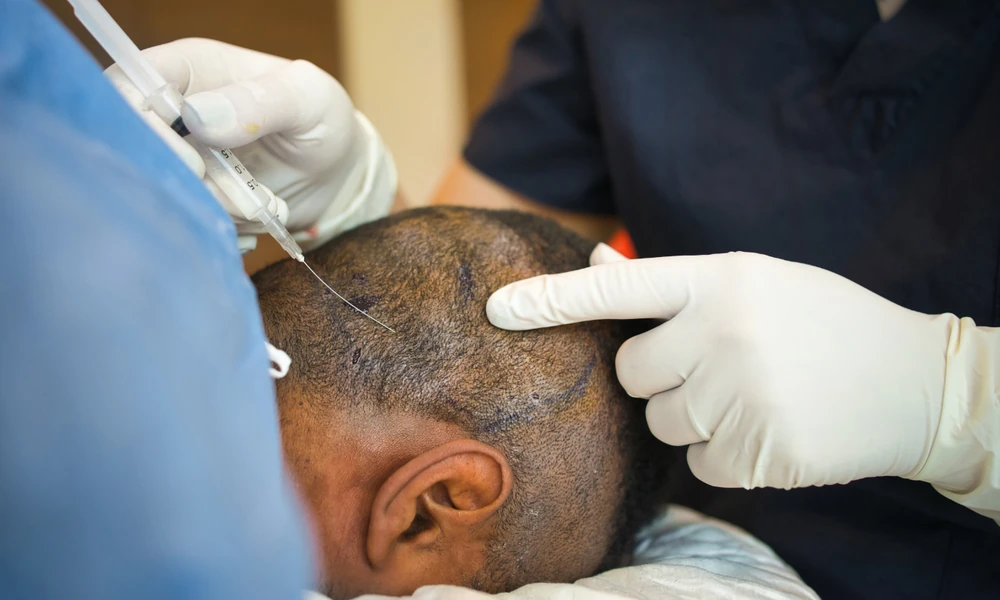
Follicular Unit Extraction, commonly known as FUE, involves extracting individual follicular units from a donor area and placing them into areas where additional hair coverage is required. Clinic Reborn describes its FUE approach as a stitchless procedure designed to minimise visible scarring and support a smoother recovery. However, the technique itself is only one part of the equation. The placement of every graft matters. Hair does not naturally grow straight upward like grass. It grows at different angles and directions depending on the area of the scalp. The front hairline, temples, mid-scalp, and crown can each have different growth patterns. This is why precise planning is important when aiming for a natural appearance.
3. Hairline Design Can Change the Entire Result
Think about a person’s face without considering their hairline. The forehead, temples, eyebrows, and facial proportions all contribute to the overall appearance. Now imagine placing an unnaturally straight or overly low hairline across that face. Even if the hair is dense, the result may not look natural. A thoughtfully designed hairline usually considers age, facial proportions, existing hair, and realistic long-term expectations.
4. Why Surgeon Experience Matters
A hair transplant is not simply a procedure where hair is “moved” from one area to another. It involves medical assessment, donor-area planning, graft handling, implantation, hairline design, and long-term thinking. This makes the surgeon an important part of the decision.
Meet Dr. Sandeep Singla
Dr. Sandeep Singla is a plastic and reconstructive surgeon associated with hair restoration and other cosmetic procedures. His official profile states that he holds MBBS, MS (Gold Medalist), and MCh Plastic Surgery qualifications, with his MCh completed at KEM Hospital, Mumbai. His official website also lists hair transplant among his areas of expertise and highlights his focus on combining surgical knowledge with personalised patient care.
At Clinic Reborn, the hair-transplant service identifies Dr. Singla as the treating cosmetic and plastic surgeon and describes personalised treatment planning as part of its approach. Patients can also review his published qualifications and certifications through his official profile and credentials.
5. What About Hair Transplant in Chandigarh?
People researching hair transplant in chandigarh may come across a wide range of clinics and treatment options.
Instead of selecting a clinic solely because it appears first in search results, compare the factors that actually matter:
- Who performs the procedure?
- What are the surgeon’s qualifications?
- How is the donor area assessed?
- Which technique is being recommended?
- Are real patient results available?
- What aftercare is provided?
- How are expectations discussed?
Location can make appointments convenient, but medical expertise and treatment planning deserve equal attention. Clinic Reborn’s hair-transplant service is positioned near Chandigarh and provides consultations and follow-up support as part of the treatment journey.
6. Considering Hair Transplant in Zirakpur? Look Beyond the Price
For someone considering hair transplant in Zirakpur, it can be tempting to compare clinics based on packages alone. But a hair transplant is not a product with a fixed price tag. The treatment plan can vary according to the extent of hair loss, number of grafts required, donor-area availability, technique, surgical complexity, and other individual factors. Therefore, when comparing hair transplant costs, ask what is actually included in the proposed treatment.
Does the consultation form part of the process? Are follow-ups included? What aftercare guidance will you receive? Is the treatment plan based on your actual graft requirement?
Clinic Reborn states that graft requirements and treatment planning are personalised according to the individual’s hair-loss pattern and desired outcome. The more useful question is therefore not “How cheap can I get a transplant?”
It is: “What treatment plan is appropriate for my hair loss, and what does the quoted amount include?”
7. Why More Grafts Don’t Always Mean Better Results
Consider a hypothetical patient with a receding hairline and thinning crown. He visits a clinic expecting maximum density and asks for as many grafts as possible. A responsible consultation would not automatically agree. Instead, the surgeon may assess the donor area, determine where grafts are most needed, discuss the progression of hair loss, and plan how available follicles can be used strategically. Perhaps the frontal hairline needs greater attention because it has the strongest visual impact. The crown may require a different density strategy. The objective becomes using the available donor hair intelligently, rather than simply chasing a bigger graft number. This is an important distinction when evaluating the best hair transplant in Punjab.
Did You Know?
A hair transplant does not necessarily stop the natural progression of hair loss in non-transplanted areas. The American Academy of Dermatology explains that medicines may sometimes be recommended to slow further thinning and help maintain natural-looking results after transplantation. This is why long-term hair-loss management can be an important part of the conversation.
8. Understand the Recovery and Growth Timeline
One of the biggest mistakes people make is expecting their final result immediately. Hair transplantation has a gradual growth cycle. Clinic Reborn states that new growth may begin around three to six months after treatment, with fuller results developing over approximately nine to twelve months. The American Academy of Dermatology similarly notes that many patients see results several months after surgery, with some requiring up to a year for the final outcome. Temporary shedding can also occur after the procedure. Therefore, seeing transplanted hairs shed during the early stages does not automatically mean the treatment has failed. Following the surgeon’s post-procedure instructions and attending recommended follow-ups are important parts of the recovery journey. For additional information, you can also explore Clinic Reborn’s hair transplant guide for Zirakpur, which discusses results, clinic selection, recovery, and aftercare considerations.
Choosing the Best Hair Transplant in Punjab Means Choosing What Fits You
There is no single transplant plan that works identically for everyone. One patient may need frontal restoration. Another may be concerned about crown thinning. Someone else may have diffuse hair loss and require a different approach altogether. That is why the best hair transplant in Punjab should be understood as a treatment experience built around the individual, not simply a marketing title. Look for a clinic where the consultation is detailed, expectations are realistic, the surgeon’s qualifications are clear, the donor area is assessed carefully, and aftercare is taken seriously. At Clinic Reborn, patients can explore its hair transplantation services and learn about its FUE-focused approach, treatment planning, hairline design, and follow-up care.
Your Hair Restoration Journey Should Start With a Consultation
Hair restoration is a personal decision, and good results begin with realistic expectations. Rather than choosing a clinic because of a bold “best” claim, take time to understand the surgeon’s qualifications, treatment approach, expected timeline, donor-area limitations, and long-term plan. If you are considering a hair transplant and want to understand whether you may be a suitable candidate, you can contact Clinic Reborn to discuss your concerns and schedule a consultation. The goal should not simply be more hair.
It should be hair that looks like it belongs to
1. How do I choose the best hair transplant clinic in Punjab?
Look at the surgeon’s qualifications, experience, treatment approach, donor-area assessment, real patient results, hygiene standards, aftercare, and consultation process. Avoid choosing only on price or promotional claims. A personalized assessment is important because every patient’s hair-loss pattern and goals are different.
2. Does a hair transplant give natural-looking results?
A hair transplant can provide natural-looking results when the treatment is appropriately planned and grafts are placed according to natural hair direction and facial proportions. Results vary between patients, so a surgeon should explain realistic expectations after evaluating the scalp and donor area.
3. How long does it take to see hair transplant results?
Hair growth is gradual rather than immediate. Some patients begin noticing new growth after several months, while fuller results commonly develop over approximately nine to twelve months. Individual timelines vary depending on healing, graft survival, hair characteristics, and treatment planning.
4. How is hair transplant cost decided?
Hair transplant cost varies according to factors such as the number of grafts required, extent of hair loss, selected technique, surgical complexity, and individual treatment needs. A consultation allows the surgeon to assess these factors and provide a treatment plan rather than relying on generic pricing.