
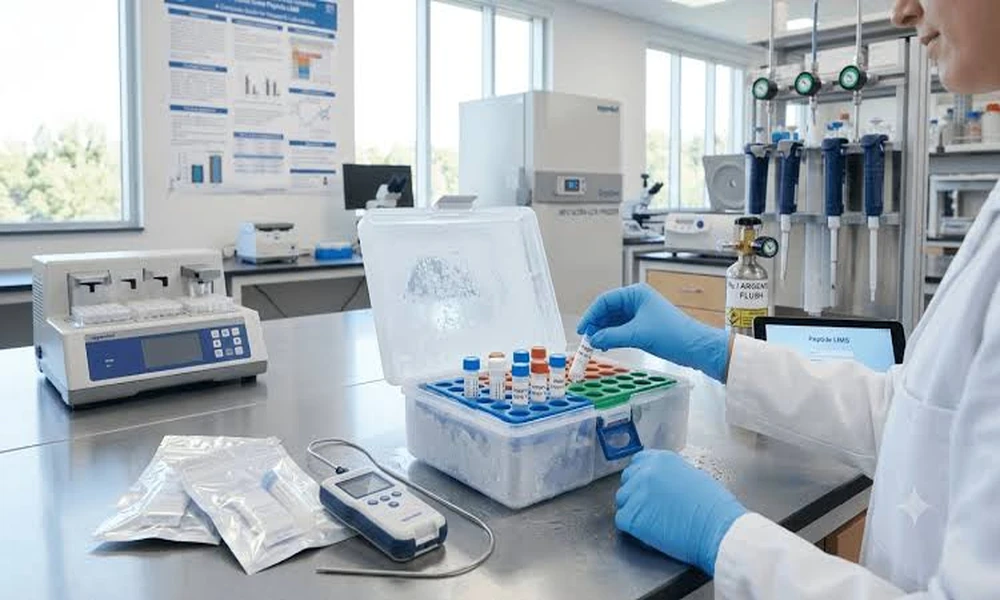
In the ever-evolving field of scientific inquiry, maintaining the integrity of biomolecules is crucial. This guide provides essential insights for researchers on the proper management of peptide compounds. As of 29 January 2025, updated guidelines have been released, ensuring that laboratories can effectively preserve these delicate substances.
Adhering to these protocols is vital for achieving consistent and reproducible results in high-stakes investigations. Proper care not only safeguards the quality of experimental data but also enhances the reliability of clinical applications. Researchers are encouraged to implement these practices to mitigate the risks associated with sample degradation.
By following established standards, laboratories can optimise their research outcomes. The success of any project involving synthetic or naturally derived sequences hinges on meticulous attention to detail in the management of these compounds.
Key Takeaways
- Updated guidelines released on 29 January 2025 enhance peptide management.
- Proper protocols ensure consistent and reproducible experimental results.
- Maintaining the integrity of biomolecules is crucial for research success.
- Effective management reduces the risk of sample degradation.
- Attention to detail is essential in handling complex compounds.
Introduction to Best Practices for Handling and Storing Research Peptides
The realm of scientific exploration demands rigorous methods for safeguarding biomolecules. The Clinical Proteomic Tumor Analysis Consortium, established by the National Cancer Institute, underscores the necessity of robust workflows for accurate measurements of every peptide.
This guide serves as a vital resource for scientists aiming to comprehend the delicate nature of peptides in modern laboratories. Maintaining their structural integrity poses significant challenges, necessitating strict adherence to established protocols.
Researchers often depend on these guidelines to ensure their work with various peptides remains precise, reliable, and suitable for their intended purposes. Effective management of these biomolecules is crucial for enhancing our understanding of complex biological systems and advancing therapeutic interventions.
“Effective management of these biomolecules is crucial for enhancing our understanding of complex biological systems.”
Understanding Research Peptide Degradation and Stability
Understanding the stability of biomolecules is essential for effective scientific investigation. Certain amino acids, such as methionine, cysteine, tryptophan, and asparagine, are particularly susceptible to oxidation and hydrolysis during storage. This vulnerability can lead to significant degradation of these compounds.
The degradation process often involves pathways like hydrolysis and aggregation, which can worsen under improper environmental conditions. Furthermore, secondary structures, including alpha-helices or beta-sheets, can heighten a peptide’s susceptibility to aggregation over time.
By identifying the specific amino acid composition of a sample, scientists can better predict how a peptide will behave under various storage conditions. Minimising the rate of degradation is a primary goal for any laboratory conducting long-term investigations involving sensitive biological compounds.
“The integrity of biomolecules is vital for ensuring reliable outcomes in scientific research.”
| Amino Acid | Susceptibility | Degradation Pathway |
|---|---|---|
| Methionine | High | Oxidation |
| Cysteine | High | Oxidation |
| Tryptophan | Moderate | Hydrolysis |
| Asparagine | Moderate | Hydrolysis |
Handling and Storing Research Peptides
In the pursuit of scientific knowledge, safeguarding the integrity of biomolecules remains a critical task. Effective management of these sensitive materials requires researchers to wear appropriate protective gear, such as gloves, while working in a clean environment.
The careful storage of these compounds must be prioritised to prevent exposure to environmental factors that could compromise their structural integrity. Every researcher should implement standardised procedures for managing their samples, ensuring consistency across all experimental trials.
By limiting the amount of handling before reconstitution, scientists can significantly reduce the risk of contamination. Maintaining a controlled environment is essential for the long-term preservation of all peptides used in high-precision scientific studies.
Essential Storage Conditions and Temperature Guidelines
Ensuring the stability of biomolecules is a fundamental aspect of scientific practices. Most peptides require careful temperature management to maintain their integrity. Typically, storage at -20°C or -80°C is essential to slow down degradation processes effectively.
Researchers must closely monitor their storage conditions. Fluctuations in temperature can significantly impact the quality of samples. For long-term preservation, it is advisable to keep peptides at -50°C or lower. This practice helps to maintain the structural integrity of these delicate molecules.
Consistent temperature control is vital. It plays a crucial role in preventing the premature breakdown of these biological compounds. By adhering to these temperature guidelines, laboratories can ensure that their peptides remain stable and functional for extended periods of research.
| Temperature (°C) | Purpose | Recommended Duration |
|---|---|---|
| -20 | Short-term storage | Up to 6 months |
| -50 | Long-term preservation | Indefinitely |
| -80 | Optimal stability | Indefinitely |
Humidity Control and Light Protection Strategies
To preserve the integrity of delicate molecules, environmental control is paramount. Moisture can catalyse hydrolysis, leading to rapid degradation of sensitive compounds. Thus, controlling humidity levels is essential.
Researchers should utilise desiccated environments to shield their samples from the damaging effects of atmospheric moisture. This practice helps maintain the stability of all stored peptides.
Protecting peptides from light is equally crucial, especially for those containing light-sensitive residues. The use of amber-coloured vials offers an effective strategy for shielding these molecules from harmful light sources.
Implementing these protective strategies is fundamental for maintaining the long-term stability of all stored peptides. As one expert stated, “Effective moisture and light control are vital for preserving biomolecular integrity.”
- Control moisture levels to prevent rapid degradation.
- Utilise desiccated environments for sample protection.
- Protect peptides from light to avoid photodegradation.
- Use amber-coloured vials for effective light shielding.
- Implementing these strategies is essential for stability.
Proper Handling Techniques for Lyophilised and Dry Peptides
Maintaining the quality of fragile compounds is critical for achieving reliable results in research. When working with lyophilised peptides, it is essential to allow the container to reach ambient temperature in a desiccator before opening the vial. This practice helps prevent moisture absorption, which can compromise the integrity of the peptide.
Researchers should always wear a dust respirator when handling larger amounts of peptide lyophilisates. This precaution ensures the safety of laboratory personnel by preventing inhalation of fine powders. Additionally, proper techniques for dry peptides involve weighing the material quickly and ensuring the container is tightly resealed immediately after use.
By following these specific protocols, scientists can effectively reduce the risk of moisture absorption. This, in turn, preserves the overall content and stability of the peptide. Careful attention to these handling procedures is necessary to maintain the high quality of lyophilised peptides throughout their shelf life.
| Technique | Description | Purpose |
|---|---|---|
| Ambient Temperature | Allow vials to reach room temperature in a desiccator | Prevents moisture absorption |
| Dust Respirator | Wear when handling larger amounts | Protects against inhalation of powders |
| Quick Weighing | Weigh the material promptly | Minimises exposure to air |
| Tightly Reseal | Seal the container immediately after use | Prevents moisture entry |
Reconstitution: Best Practices and Considerations
Effective reconstitution of biomolecules is essential for maintaining their functional integrity. Researchers must pay close attention to various factors during this process to ensure optimal outcomes.
Selecting the appropriate solvent is a complex task that requires careful study of the peptide sequence and its polarity characteristics. This choice significantly influences the solubility and stability of the peptide.
During the reconstitution process, scientists may use sonication in a water bath for several minutes to help dissolve larger particles. However, it is vital to maintain strict temperature control, as excessive warming can lead to the degradation of the peptide.
The choice of solvent, whether acidic or basic, must be tailored to the specific amino acid composition of the peptide being prepared. By following these best practices, scientists can ensure that their reconstituted peptides are prepared correctly for subsequent experimental use.
| Consideration | Description | Importance |
|---|---|---|
| Solvent Selection | Choose based on peptide polarity | Affects solubility |
| Sonication | Use water bath for larger particles | Improves dissolution |
| Temperature Control | Avoid excessive warming | Prevents degradation |
| pH Adjustment | Match solvent to peptide composition | Enhances stability |
Packaging and Aliquoting to Prevent Freeze-Thaw Cycles
The integrity of delicate biomolecules can be significantly enhanced through proper packaging and aliquoting techniques. To avoid degradation caused by repeated freeze-thaw cycles, researchers should aliquot their peptide solutions into smaller, single-use vials. This method not only preserves the quality of the peptides but also simplifies the experimental process.
Minimising exposure to ambient conditions is crucial. Utilising vacuum-sealed or nitrogen-flushed containers for the storage of all peptides effectively prevents moisture ingress and oxidative damage. Each time a sample undergoes multiple freeze-thaw cycles, the risk of aggregation and structural breakdown increases significantly for the peptide.
Proper packaging in airtight containers is essential for protecting these delicate molecules from oxidative damage and moisture ingress. By implementing these aliquoting strategies, laboratories can ensure that their peptides remain stable and ready for use in future experiments.
Innovative Storage Solutions: Role of Pure Peptides
The role of high-quality materials is paramount in preserving the integrity of biomolecules in research. Pure Peptides provides essential materials that ensure consistency in experimental outcomes.
Innovative storage solutions offered by Pure Peptides help maintain the integrity of samples, even under challenging conditions. By selecting products from this brand, scientists benefit from materials designed to meet the highest standards of purity.
These advanced solutions are critical for any project that relies on precise quantification and stability of various peptide sequences. Consistent use of these high-quality products allows for more reproducible results across a wide range of complex biological studies.
- Pure Peptides ensures reliability in scientific research.
- Innovative solutions help maintain sample integrity.
- Products meet high standards of purity.
- Critical for precise quantification of peptides.
- Supports reproducibility in biological studies.
Optimal Storage for Peptide Solutions and Reconstituted Forms
The effective storage of biomolecules is a cornerstone of reliable scientific investigation. Proper management of peptide solutions is crucial for maintaining their bioactivity and stability.
When storing a peptide solution, it is important to optimise the buffer pH. Acidic conditions between 4 and 6 often improve stability, reducing the risk of aggregation and deamidation.
Reconstituted forms are particularly vulnerable to degradation. Thus, they should be kept frozen below -15°C at all times. Maintaining the correct concentration of the peptide in solution is vital for ensuring that the results of assays remain accurate.
Researchers should avoid long-term storage of these solutions, as they are significantly more susceptible to chemical breakdown. By carefully managing the storage of these solutions, scientists can preserve the bioactivity of their peptides for short-term experimental use.
| Storage Consideration | Recommendation | Impact on Stability |
|---|---|---|
| Buffer pH | 4 to 6 | Reduces aggregation risk |
| Storage Temperature | Below -15°C | Prevents degradation |
| Concentration | Maintain optimal levels | Ensures assay accuracy |
| Long-term Storage | Avoid in solution | Minimises breakdown |
Ensuring Quality and Purity During Storage
Safeguarding the quality of biomolecules is essential for achieving accurate and reliable research results. Rigorous quality control measures must be implemented to confirm the integrity of peptides. This includes the use of analytical techniques, such as amino acid analysis, to determine the net content of each sample.
Analytical RP HPLC chromatograms are crucial for verifying the purity of these compounds. It is recommended to use shallow gradients of no more than 2% change in organic concentration per minute during analysis. This ensures that the peptides remain stable and accurately assessed.
The Clinical Proteomic Tumor Analysis Consortium suggests that peptides used in an assay should ideally have a length of 7-20 amino acid residues. High purity is vital for reliable quantification, particularly when employing synthetic peptides for targeted mass spectrometry measurements.
- Implement strict quality control measures to meet necessary specifications.
- Use amino acid analysis to confirm net peptide content.
- Adopt shallow gradients in HPLC for accurate purity verification.
- Ensure peptides are within the recommended length for assays.
- Maintain high purity for effective quantification in experiments.
Advanced Storage Guidelines and Research Insights from Pure Peptides UK
Effective sample management hinges on the latest insights into the preservation of delicate biomolecules. Advanced storage guidelines provided by Pure Peptides UK offer researchers the insights needed to maintain the highest standards of sample integrity.
Efficient delivery services ensure that most orders from Pure Peptides UK arrive within 1-2 working days, supporting the pace of modern research. These insights serve as a valuable reference for any laboratory looking to improve their protocols for managing various peptides.
By integrating these advanced guidelines into their daily operations, scientists can ensure that their research remains at the forefront of the field. The commitment to quality shown by Pure Peptides UK helps researchers achieve more accurate and reproducible results in their scientific endeavours.
| Key Insight | Description | Impact on Research |
|---|---|---|
| Sample Integrity | Advanced guidelines ensure optimal preservation | Enhances reliability of results |
| Timely Delivery | Most orders arrive within 1-2 working days | Supports research timelines |
| Reference Material | Provides essential insights for laboratories | Improves handling protocols |
| Quality Commitment | Ensures high standards in peptide products | Facilitates reproducibility in experiments |
Conclusion
Safeguarding delicate biomolecules is crucial for reliable scientific investigations. Storing peptides correctly is an essential aspect of research that requires strict adherence to best practices outlined in this guide.
Whether dealing with dry, lyophilised, or reconstituted forms, maintaining the right conditions is key to preserving these valuable substances. By following established guidelines, researchers can ensure the longevity and reliability of their peptide samples for future studies.
Consistent application of these storage techniques will ultimately lead to more accurate and reproducible results in various scientific endeavours. This guide provides a necessary framework for any researcher aiming to master the complexities of managing peptides effectively.